It's ours if we want it.
May 30, 2026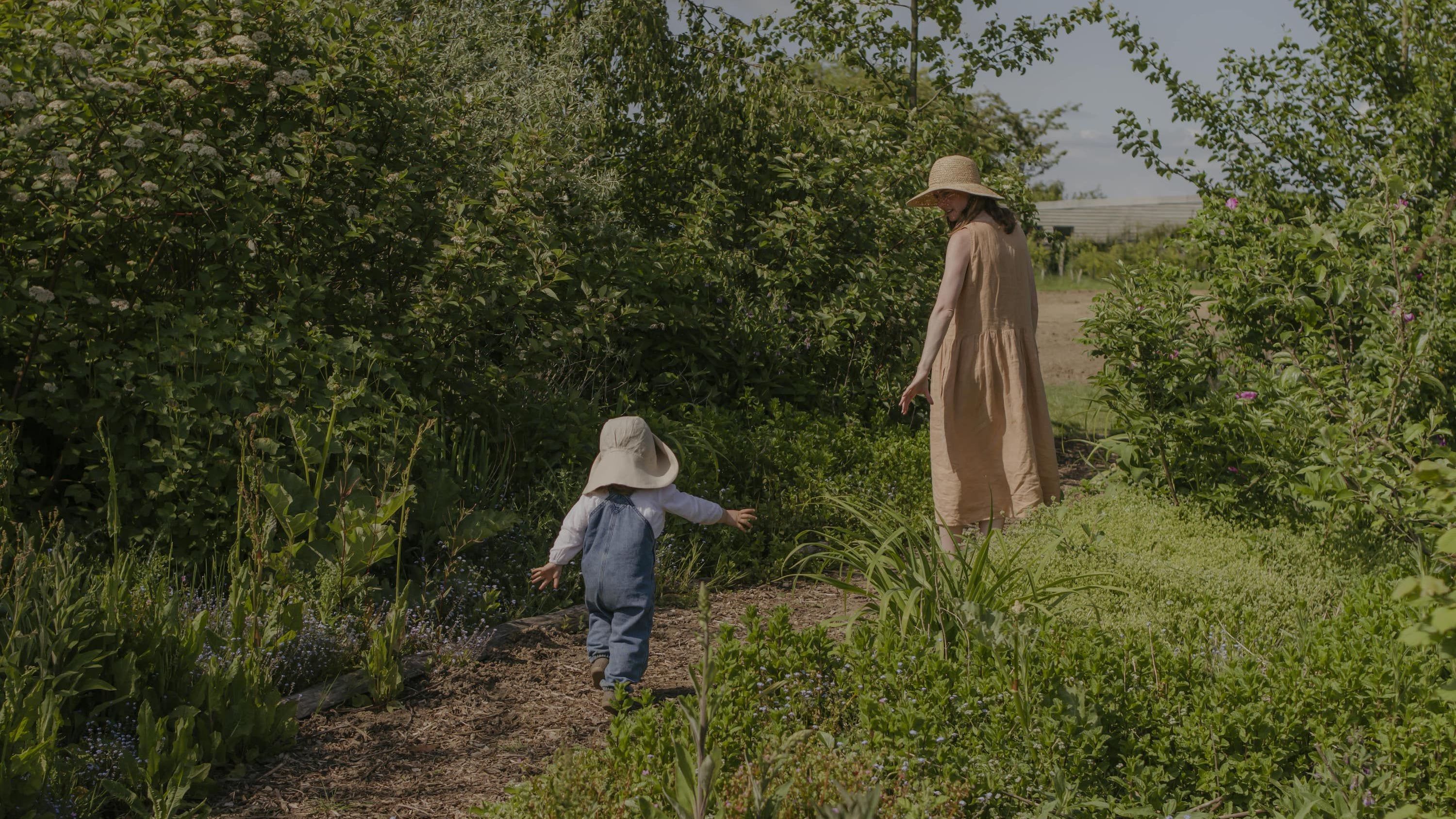
Close your eyes for a moment.
It's a Saturday in late summer. You've driven down the lane, and the noise of the week falls away behind you. The children are already gone, running ahead between the apple trees, boots in the long grass, hands reaching for whatever's ripe. There's woodsmoke from the farmhouse and the smell of something cooking. Down by the lake, someone you've come to think of as one of your own is teaching your youngest to cast a line. Later there'll be a long table, food grown a hundred yards from where you sit, and the kind of evening that doesn't end so much as soften into dusk.
This isn't a holiday. It's a place your household belongs to, and returns to, for as long as you choose.
We know the dream — because we lived it
In 2020 we did the thing so many people quietly long to do. We left the city, bought fifteen acres in the South Downs, and started a smallholding. We learned to grow from seed, to read the soil, to follow the seasons. We slowed down. Some of the most grounded days of our lives were spent out on that land.
But the dream asked for everything.
The land wants you every single day — no matter the weather, no matter what else life is asking of you. We loved the work; we just came to believe the life shouldn't have to be all-or-nothing. And as we talked to others who felt the same pull, we kept meeting the same wall: people rooted in the city, people with careers and long hours, households who couldn't take on the land and all the infrastructure a smallholding needs. They wanted food they could trust, a connection to the land, a brighter future for the generations coming after them — and no realistic way in.
So we built a way in
What if you could be a smallholder — hold the land, grow the food, gather the people — with a professional farm team as the crew beside you?
Every serious craft runs on a team. The athlete has their coaches; the smallholder has theirs. Yours tends the estate to a professional standard all year round — through the dawn starts and the winter mornings that are their calling — so your relationship with the land is one you choose, season by season, rather than one that runs your life.
Be as hands-in-the-soil as you like: sow a bed, bring in your own harvest, teach the children where eggs really come from. Or arrive to a garden already flourishing in your name and simply live in it. Either way, you're the smallholder. The land is yours to hold, and it's always cared for.
This is My Little Farm. Real food from the land you hold — without selling up, moving out, or trading away the life you've built. Members are co-owners of land, not subscribers to a delivery service.
What this summer makes possible
That first farm was the beginning, never the destination.
This summer we're taking the next step: bringing nearly a hundred acres of Sussex into community hands — a working estate cared for by the same household for thirty-five years.
It already breathes. Ancient woodland and mature hedgerows. Pasture managed for decades without harm. A six-bedroom farmhouse with real fires and a kitchen that's hosted thousands of meals. Sixteen thousand square feet of barns, already standing. A mature orchard, and a one-acre lake big enough to row across.
We're not starting from scratch. We're stepping into something whole — and farming it regeneratively from the very first season, so the soil is left more alive each year than the last.
Picture your place in it: your own serviced garden and a flock of heritage hens. A weekly box of beyond-organic vegetables and eggs from soil you've walked. The freedom to come and go. Eight gatherings across the year that mark the turning seasons. Woodlands to lose the children in, an orchard heavy by September, fires in the farmhouse when the evenings draw in.
Why it matters: food you can hand down
This is bigger than a nice weekend in the country.
The food system is fragile, and most of us have handed total responsibility for feeding our households to a supply chain we don't control and can't see. Holding a stake in real, productive land is how you take that responsibility back — not in theory, but in vegetables, eggs, and a place that keeps producing long after you're gone.
The land is held permanently in community. It doesn't get flipped, financialised, or sold out from under the people who depend on it. The estate doesn't get flipped. The estate gets stewarded — and what you hold can be passed to the generations who follow.
This is what we mean by reclaiming ultimate responsibility: reconnecting to the land, to real food, and to each other, and securing the source of your family's nourishment for the long future.
Where we're headed
A hundred acres is where we begin. It's one step on a much longer road: 100,000 acres for 100,000 families by 2050 — a network of community-owned land feeding the households who hold it.
Raise your hand
We're not asking for anything today. If any part of this stirs something in you, add your name to the waitlist. We'll keep you close to what happens next — how the vision unfolds, when you can come and stand on the land yourself, and what holding your own serviced smallholding could look like for your household.